
Crashing waves on reefs. A mouth full of sea water. That elation of almost being able to gybe before you take a tumble.
It's not the usual images your mind conjures up when you think about going on holiday to Mauritius, but they're the ones you'll still be talking about long after you've gone home. The ones that will have you itching to get back out there.
Windsurfing in Mauritius may not be the main reason people visit the island. But once someone has gotten a taste of it, it's the reason they keep coming back.
Because Just behind those reefs sits one of the best windsurfing setups anywhere in the world. On the inside, the lagoons run flat, shallow and warm. On the outside, there’s chop, there are bumps, and if you go looking there are waves that'll get the heart racing.
If that alone doesn't convince you, then this guide will tell you everything that you need to know, until you're at the point you're trying to cram a wetsuit into your suitcase.
Why Mauritius is a windsurfing paradise
Plenty of places have wind. Far fewer have wind you can plan a holiday around.
Mauritius sits square in the path of the south-easterly trade winds, and they blow for most of the year. At Le Morne, the wind reportedly tips past Force 4 on more than 300 days a year. That’s the difference between a windsurfing holiday and a week of sitting on the sand refreshing a forecast app.
Then there’s the geography. A coral reef rings almost the whole island. Ocean swell hits that reef and turns into world-famous waves on the outside, while the water it shelters on the inside stays glassy and shallow. Beginners finding their balance and experts hunting waves can launch off the same beach. That barely happens anywhere else.
It’s warm, too. You’re sailing the Indian Ocean in board shorts rather than wrestling into a 5mm winter wetsuit in a windy car park. Even through the windy winter months, the water stays comfortable.
And here’s the bit nobody mentions... the windiest season is also Mauritius’ quieter tourist season. Come for the wind and you’ll often pay less for a room than the sun-seekers do in peak weeks.
When the wind does drop, you’re still in Mauritius. A UNESCO-listed mountain sits behind you. There are dolphins offshore, a national park inland, rum distilleries, and tasty street food. Bring a partner who doesn’t sail, or the kids, and nobody ends up bored.
Windsurfing conditions: when to go
Mauritius runs two seasons, and they are completely different holidays. Here’s what to expect from each.
- May to November is the windy season. The south-easterly trades are at their most reliable through the southern-hemisphere in winter, and the most consistent wind usually lands between July and October. Expect roughly 15–25 knots at the main spots in season. Enough to plane and push on, still manageable if you’re improving. The Le Morne mountain accelerates the wind across the bay, so a modest forecast often over-delivers.
- November to April runs lighter and hotter. More humidity, warmer water, gentler breeze. Lovely for learning and relaxed pottering, less dependable if you want to plane. It’s also cyclone season, so expect the odd sharp afternoon shower and keep half an eye on the forecast.
The other thing that you need to factor in is that both coasts are completely different. The central mountains split the island in two so the south, east and south-east catch the trade winds. The north and west sit in the wind shadow and stay calmer.
In practice, that means a July or August trip to the south or east gives you the best odds of sailing every day you want to. Come February, you’ll get hot, glassy water and a gentle breeze, which is no bad thing if you’re learning or bringing people who’d rather snorkel. Just don’t book February expecting to plane.
The best windsurfing spots in Mauritius
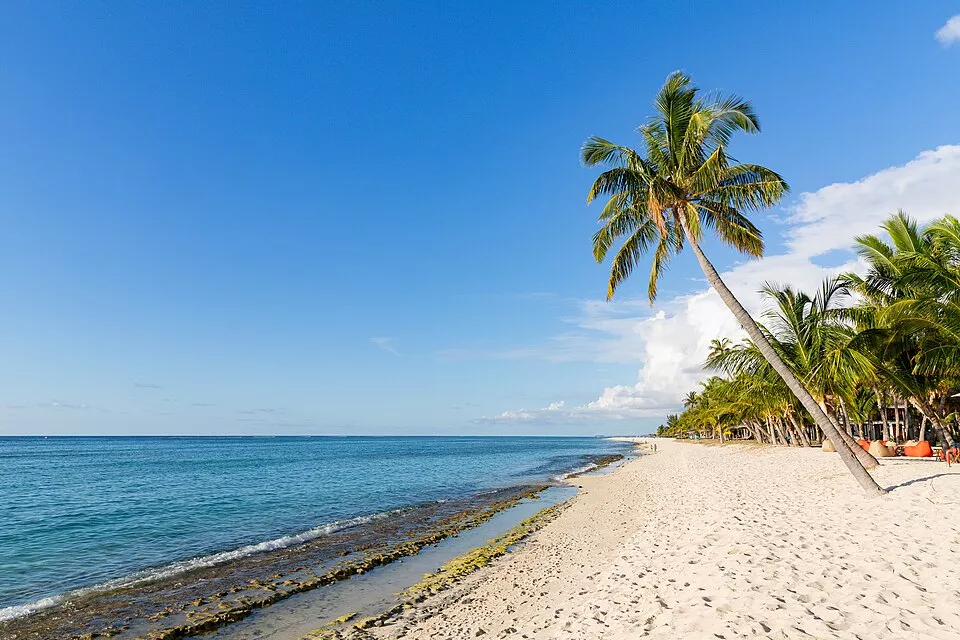
Five spots worth knowing, all different, all with their own pros and cons.
Le Morne — the spot that has it all
If you only windsurf one place in Mauritius, windsurf here. The Le Morne Brabant mountain rises straight out of the sea behind a turquoise lagoon, and the bay in front of it holds just about every condition you could ask for.
The inner lagoon is flat, warm and forgiving, with the reef roughly 600m offshore and water that’s knee-to-waist deep in places. Onshore wind here makes it a gift for first-timers and for freestyle practice.
Move out about 200m and it turns sideshore with more chop. Classic bump-and-jump territory, and the natural home for your first proper jumps and faster runs.
Further out again, the reef breaks. Little Reef offers smaller, confidence-building waves, then comes Manawa, then the expert-only One Eye, which is every bit as serious as its reputation.
What makes Le Morne special isn’t any one of those zones. It’s that you can progress through them over a single week without ever changing beach. Start in the shallows on Monday, be out in the chop by Friday, and watch people far better than you having a go at the reef while you eat lunch.
New to windsurfing? Check out our beginner's guide to Windsurfing.
Anse La Raie — the quiet northern lagoon
Le Morne gets busy. Anse La Raie doesn’t.
Right up in the far north, near Cap Malheureux, Anse La Raie has an outer reef belt that creates a lagoon stretching around 2.5km from shore.
It’s deeper than Le Morne’s inner lagoon but still well protected by that reef creating a big, safe, side-shore playground with far fewer boards on the water.
The only downside to this location is that entry can be a bit fiddly, making it a better suited to improvers than absolute beginners.
Belle Mare and Poste Lafayette — east-coast freeride
Le Morne is the famous one and Anse La Raie is the quiet one, but the east is where you can sail a long, straight run without checking over your shoulder every thirty seconds. If you’ve just started stringing proper reaches together, that room is worth a lot.
Both Belle Mare and the village of Poste Lafayette have pristine lagoons that catch the east and north-east wind, making them perfect for freeriding on flat water. As they're also out of the way, there's times where you can feel like you've got the water to yourself.
Pointe d’Esny and Blue Bay — the south-east ‘Pool’
Locals call this one The Pool, which tells you most of what you need to know. It’s the sort of water that makes learning feel less daunting with water clear enough to see the bottom, shallow enough to stand up and start again, and wide enough that you’re not sailing into anyone.
The only thing to watch out for is that Blue Bay carries a moderate current, so take care while your in there.
Turtle Bay, Balaclava — the calm north-west base
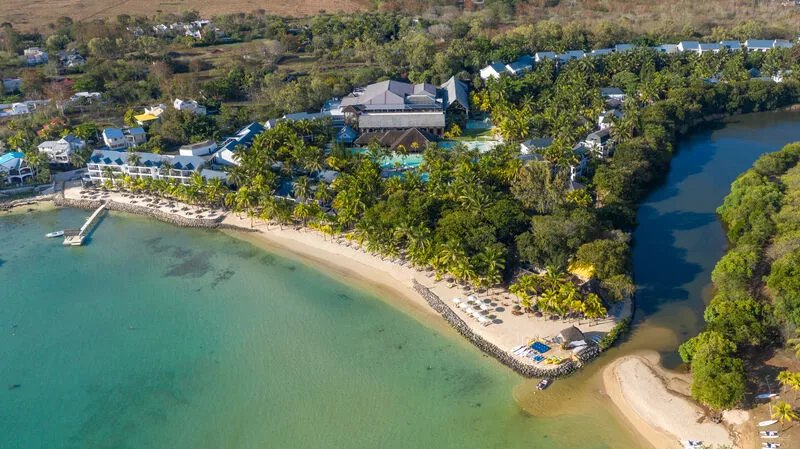
Time for some honesty. Turtle Bay isn’t a windsurfing spot. It’s a marine park, and it’s where our new Ravenala Attitude sits.
Turtle Bay (Baie aux Tortues) sits at Balaclava on the north-west coast, at the mouth of the Citron River. It’s roughly 20 minutes from the capital, Port Louis, about the same from the lively village of Grand Baie, and around an hour from the airport.
Think of it as a brilliant base for your first steps rather than somewhere for your hundredth session. If you want that, then Le Morne and the east-coast is the place to be.
But if you're looking to do a little windsurfing, whilst enjoying other activities like padel, pickleball, tennis and sailing then this is the perfect spot for you.
Where to base yourself
Where you sleep shapes what you sail. Three broad choices, and none of them are wrong.
Base yourself in the south-west, around Le Morne, and you wake up on the best windsurfing water on the island. Roll out of bed, look at the bay, rig up. Evenings are quieter down there and it’s further from the airport, so this suits a trip where windsurfing is the main focus and everything else is a bonus.
In the north, around Balaclava, Grand Baie or Anse La Raie, and you trade some wind for a lot of convenience. Calm water on the doorstep, plenty of restaurants, easy access to Port Louis, and Anse La Raie close by when you want a proper session. The stronger stuff is a drive away rather than a walk.
In the east, around Belle Mare or Poste Lafayette, and you get big lagoons, reliable breeze and far fewer people. It’s the quiet option, and the trade-off is that there’s less going on when you’re off the water.
Our own base is the Neilson x The Ravenala Attitude, right on Turtle Bay at Balaclava. It’s the north-west option, so the wind is gentler out front, which is perfect if you’re learning.
Ready to ride?
So... flat lagoons to learn in, chop to progress on, reef breaks for the seriously brave, and trade winds that show up for six months at a time. Mauritius is a windsurfing paradise.
Pick your season, pick your coast, and the rest sorts itself out. If you’d rather have the kit, the coaching and the beach handled for you, take a look at our windsurfing holidays.
Want more windsurfing content? Check out our posts on beginner windsurfing tricks, where to go windsurfing in Europe and the best windsurfing spots in Greece. Or if you've got your heart set on Mauritius then check out our guide on best Mauritian dishes to try, best snorkelling spots in Mauritius and our guide to cycling in Mauritius.


