
Picture this. You've spent the last hour with your quads on fire, grinding your way up a sun-baked climb. But you're over the top now. You're cruising down a winding coastal road, the Aegean glittering below, a warm breeze on your back, and there's a little taverna at the bottom with your name on it. Fanta Limon. Maybe a cold Mythos. You've earned it.
That's cycling in Greece. And while everyone else is packing their bikes off to Majorca or Girona, Greece remains something of a hidden gem — one that delivers island loops, mountain climbs, quiet back roads and jaw-dropping coastal descents in equal measure.
Whether you're a seasoned road cyclist chasing KOMs, a mountain biker after epic trails, or someone who just fancies pedalling between pretty villages with a coffee stop in between, Greece has it all. This guide covers everything you need to know. The terrain, the best regions, when to go, what to pack, and how to make it happen.
What is cycling in Greece actually like?

Greece is more varied than most cyclists expect. You've got coastal roads that snake around little bays, olive grove-lined flats that let you spin your legs out, serious mountain climbs that'll fill your thighs with lactic acid, and island loops with views that'll stop you in your tracks.
Road quality is generally decent on the main routes with smooth tarmac and only the occasional lump and bump on the backroads. Traffic is busiest around the main resorts and tourist spots, but venture onto the quieter roads and you'll find stretches where it's just you, the hills and the whirr of your rear hub.
As for the cycling community, it's growing. You'll spot other lycra-clad riders, particularly in the more popular regions and cafes for the customary mid-ride coffee stop can be a bit hit and miss, go somewhere popular and they’re never too far away. Go out to the middle of nowhere and you’re going to struggle to find one. But that’s part of the charm of cycling in Greece, it still feels unspoilt. The road less ridden. The view less instagrammed. The segment that’s still up for grabs.
Road cycling vs mountain biking in Greece: which is better?
The good news is that you don't really have to choose. Greece caters for both disciplines.
Road cycling in Greece is outstanding. Quiet roads, smooth tarmac (on the main routes), some seriously tasty climbs and coastal descents that make every kilometre you’re struggling to get uphill worth it.
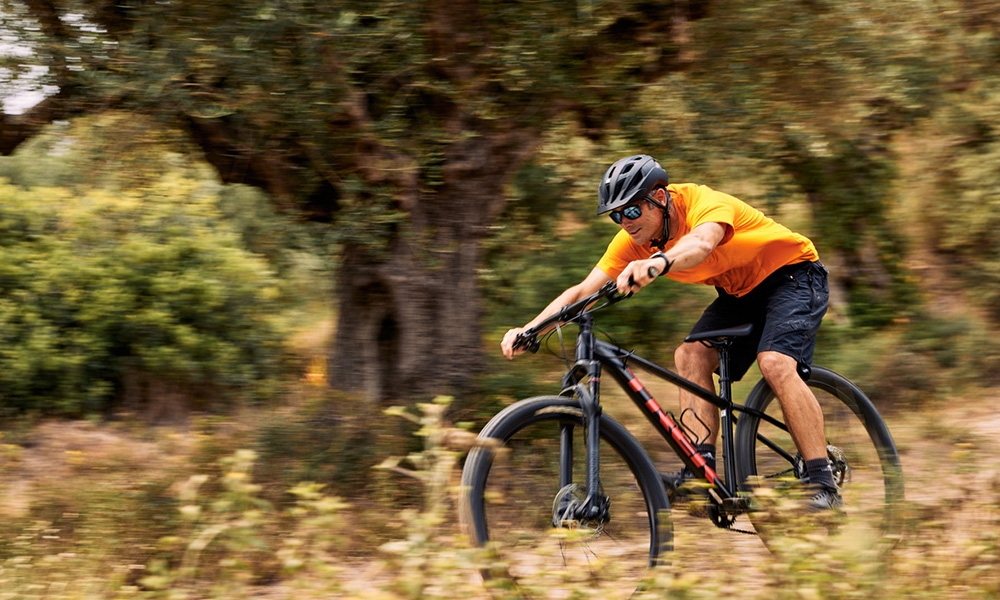
The mountain biking scene isn’t as developed as the road cycling one, but that’s not a bad thing. There's a mix of trails and tracks, ranging from technical singletrack to gravel paths, all cutting their way through ancient landscapes. Almost all of them, feel like you’re one of the few people to ride them that day.
Our verdict? Greece edges it for road cyclists, thanks to the sheer variety of coastal loops, the quality of the main roads and some epic summit-to-sea descents. But mountain bikers shouldn’t be put off by that, the trails are brilliant and largely quiet, making you feel like you’re exploring undiscovered trails.
Best time to go cycling in Greece
Timing matters in Greece. Get it right and you'll have near-perfect conditions. Get it wrong and you'll be fighting heat, traffic or both.
Here’s a breakdown of the best times to go cycling in Greece.
May–June: The sweet spot. Temperatures sit comfortably between 18–30°C, the roads are quieter, the wildflowers are out and everything feels fresh. This is when we'd tell any cyclist to go, if you’re looking to do long hours in the saddle.
July–August: If you love morning or early evening rides that last a couple of hours, then it’s perfect for you. If you want to spend 5-6 hours in the saddle, then probably best to steer clear. Inland temperatures can get seriously hot, we're talking "maybe don't tackle that 2,000m climb at noon" hot. Stick to coastal routes where sea breezes keep things bearable. Cycling in July or August is doable, you just need to work with the conditions and stick to the morning and late afternoons.
September–October: Nearly as good as spring. The heat is a lot less oppressive, the summer crowds have thinned, and the landscape takes on a gorgeous golden quality. The one downside? The days are getting shorter, so you've got a slightly tighter window for longer rides. Still an excellent time to go, though.
The best places to cycle in Greece
Greece has no shortage of brilliant cycling destinations but these are the regions we keep coming back to, and the routes that make them special.
The Peloponnese
The Peloponnese is one of Greece's premier cycling regions. The terrain is epic — rolling hills, olive grove-lined roads, coastal stretches to cruise along and little bays to have a little dip in when your bib gets a little salty. It's also where you'll find some of our favourite routes, ranging from gentle spins to proper suffer-fests.
Recommended routes:
Ancient Messini (70km | 3.5 hours | Challenging): One for the KOM-chasers. You'll climb hard through a string of rural towns before reaching the ancient ruins of Messini to offer a slight distraction from your legs, that are starting to feel cooked. From there it's a traffic-free descent through olive groves and vineyards back to Kalamata with views that are worth every uphill metre.
Secret Valley ( 50km | 3.5 hours | Moderate): Barely touched roads, rolling descents and the kind of riding that reminds you why you started cycling in the first place. The route heads out from Analipsi through Medina, Spilaly and Vasilada before looping west through Ithomi and Aristodimio. Quiet, beautiful and genuinely rewarding.
Messy Squared (7km | 1 hour | Easy): Short, simple and scenic, everything you need if it’s been a while since you’ve been on the bike. The route cruises along quiet roads, gravel paths and sandy beach trails into the town of Messini. Perfect for beginners or as a recovery ride after spending some serious time in the saddle.
Fancy cycling in the Peloponnese? Then why not check out Messini Beach Club located in the southern Peloponnese with all bikes included in the price and regular guided rides too.
The Ionian Coast (Lefkada)
Lefkada is a standout cycling destination on the Ionian Coast due to its brilliant mix of road and trails. The cycle routes on Lefkada range from coastal flats (bliss for anyone who shudders at the thought of a climb) to some of the most challenging ascents in the Acarnian mountains. Well-maintained roads, stunning Ionian Sea views and a genuine sense of adventure throughout. Who doesn’t want that on a cycling holiday.
Recommended routes:
The White Church Summit Climb (Advanced | ~1,158m ascent | Advanced): Considered the Everest of mountain biking on Lefkada, this climb winds through orange groves and vineyards before ascending through the hillside towns of Sivros and Agios Ilias, past a scenic limestone quarry, all the way to the White Church at the top. The views are enough to take your breath away, if you can catch it after all that climbing.
Nydri to Lefkada Town via Karya ( 43km | 823m ascent | ~3 hours | Intermediate): A stunning road route taking in Nydri, Karya and Lefkada Town with Ionian Sea views along the way. The coastal roads on the eastern side are mostly flat, while the mountainous interior delivers proper climbing. One of the most scenic rides in all of Greece.
Lefkada Circular (66km | 1,893m ascent | ~4–5 hours | Challenging): One of the most complete ways to experience Lefkada by road. The loop takes in Nydri, Oxikorfo, Kastro, Karya and Apolpaina, passing through lush, forested mountain interior before dropping dramatically back to the coast. Epic in every sense.
Sounds like fun? Stay at Cosmos Beach Club or Vounaki Beach Club to experience cycling in Lefkada.
Rhodes
Sparkling deep blue seas, vast pine forests, flowering meadows, romantic valleys and historical mountain villages — and routes that range from gentle coastal spins to energetic climbs into the hills. Rhodes is a cyclist’s paradise. The roads are generally well-surfaced, with the only downside being that they can get a little busy around the main tourist areas. But that’s a small price to pay in the grand scheme of things, isn’t it?
Recommended routes:
Kalavarda Coastal Loop (37km | Intermediate | Intermediate): A gorgeous coastal ride that hugs the shoreline from Kalavarda toward the ancient city-state of Kamiros, with far-reaching views across to the island of Chalki. Accessible, scenic and a brilliant introduction to cycling in Rhodes.
Valley of Petaloudes (Butterflies) Loop (43km | Intermediate | Intermediate): Head north from Kalavarda along the coast to the colourful houses of Fanes, then turns inland to the Valley of Petaloudes, a lush green gorge filled with thousands of butterflies between June and September. One of the most unique cycling experiences in Greece.
Epta Piges to Fountoukli (40km | Intermediate | Intermediate): Ride out to the secret forest enclave at Epta Piges (Seven Springs), then up through a verdant valley to the Monastery of Agios Nektarios, past the abandoned Italian ghost village of Eleousa, and on to Fountoukli — the oldest Byzantine chapel on Rhodes. History, nature and cycling all in one brilliant loop.
Want to go cycling in Rhodes? Check out Levante Beach Club which has over 25 activities included in the price of the holiday.
Crete
Crete might just be the most diverse cycling destination in all of Greece. Deep canyons, incredible plateaus, majestic mountains, lush valleys, scenic coastal roads, sun-drenched vineyards and picturesque mountain villages. It's all here, often within the same ride. Inland roads are largely car-free, and thanks to Crete's mild climate, cycling is possible almost year-round (though you'll want to avoid the peak summer heat inland).
Recommended routes:
Chania to Rethymno Coastal Road (~60km | Intermediate | Intermediate): A classic Cretan ride along the north coast. Mostly manageable terrain that rewards with incredible scenery throughout. A brilliant first day out.
Lasithi Plateau Loop (55km | Challenging | Challenging): The route through the Lasithi Plateau takes in white-sailed windmills, the majestic Dikti mountains as a backdrop, and a tough ascent from Hersonissos that earns you a glorious descent.
Rethymno to Arkadi Monastery (35km | Intermediate | Intermediate): A shorter but deeply rewarding route through the lush Amari Valley to the historic Arkadi Monastery, a symbol of Cretan resistance. Rolling hills, some challenging climbs and plenty of reasons to stop and soak it all in.
What do I need to take?
Packing for a cycling holiday takes a bit of thought. Here's what to consider, and what you can leave behind.
- Your bike. The big one. You'll need to decide whether you want to pack it into a bike box and pay the airline fees, or hire one at the destination (or if you’re with Neilson, just visit the bike centre and pick one up without the faff). Both have merits. Bringing your own means familiarity; renting means less faff at the airport. Either way, sort it before you go.
- Pedals. If you use clipless pedals, bring your own. Rental bikes rarely come with SPDs — and riding in flat pedals for a week isn't going to work for you if you’re planning on racking up the miles.
- Cycling shoes. Bring your own. They're not the type of thing that you can rent and even if you could, you’d want the comfort of your own anyway.
- Your saddle. If you're logging serious hours in the saddle, your own saddle can make a huge difference. Especially if you go through chamois cream like no ones business.
- Bike computer and mount. So you don't get lost. And so you can agonise over your average speed or that upcoming climb.
- Bibs and jerseys. Pack a couple for the week. You can always wash them in the sink and hang them out if you need to.
- Helmet. Essential. Always. But this is the type of thing that you can rent. So, if you’re short of luggage space, you can pick them up in resort.
- Sun cream. Lots of it. The Greek sun is no joke — especially when you're moving too fast to notice it and you’re covered in salt from your sweat.
- Water bottles. Hydration is everything. Fill up whenever you can.
- Puncture repair kit and tyre levers. Essential if you're riding your own bike. Less so if you're renting as they’re typically supplied for you, although, it’s always worth checking what's provided.
- Ibuprofen, deep heat and electrolytes. For when the legs start to grumble. Which they almost certainly will.
- Chamois cream. No further explanation required. Just pack it.
Clip in and go
Greece is one of Europe's great cycling destinations. And one of its most underrated. From the epic climbs of the Peloponnese to the coastal loops of Lefkada, the pine-forested trails of Rhodes to the high-altitude plateaus of Crete, there's a ride here for every kind of cyclist.
The roads are quieter than you'd expect. The scenery is better than you could plan for. And the reward at the end... a cold mythos, some gyros, a view that makes it all worth it.
Ready to make it happen? Take a look at our cycling holidays — we'll help you find the perfect base, sort the kit and make sure the only thing you need to worry about is how many café stops to have.
If you’re looking for more cycling content, then check out our posts on mountain biking Vs road cycling, the best mountain biking routes in rhodes, our four favourite cycling routes in lefkada and our favourite cycling routes in the Peloponnese.


