
Greece is one of those places that just works for families. The food is fresh and unfussy. The sea is warm and calm. And from the moment you land, the pace of life slows down in the best possible way.
But not every corner of Greece is the same. The best places in Greece for families aren’t necessarily the most famous ones, and there’s a big difference between an island that suits a toddler and one that’s going to keep a teenager entertained.
So, to help you understand where to go, we’ve put together this helpful guide. Whether you’re after a relaxed beach base, an action-packed activity holiday or a bit of both, here’s everything you need to know about planning a family holiday to Greece.
Why families love Greece

There's a reason families have been coming back to Greece for decades. Beyond the obvious — the sunshine, the scenery, the sea — there's something about it that just makes the whole family holiday thing feel a little easier. A little more relaxed. A little more "siga, siga!"
Start with the culture. Greeks are famously welcoming to children. Restaurants that back home would raise an eyebrow at a small child turning up at 9pm will welcome them with open arms and bring out a bowl of chips without being asked.
Then there's the food. Grilled fish, warm flatbreads, creamy tzatziki, pastries, salads. It's fresh, colourful and full of flavours, so much so, that even the fussiest of eaters tend to find something they love. (And if all else fails, the chips are excellent.)
The beaches are another big plus. Much of the Ionian coast and the more sheltered parts of the Aegean offer calm, shallow seas that are brilliant for younger children. They're gentle enough to paddle and safe enough to give them the freedom to splash around. Combine all of that with flight times of just 3–4.5 hours from the UK, Greece is about as accessible as a family destination gets.
Oh... and then there's the ancient ruins, the boat trips, the water parks and all the water sports you can try as well. Yep. Greece is a destination that genuinely has something for every age group and that's no small feat.
Where to go? The best places for a family holiday in Greece
Picking the right destination is probably the most important decision you'll make. Here are our top picks for some of the best destinations in Greece for families.
Rhodes – The All-Rounder

If you're after a destination that ticks every box, Rhodes is your answer. The north and east of the island are lined with sheltered, sun-soaked shorelines that are calm and accessible – ideal for families.
These shorelines are host to hundreds of beaches that are perfect for those who are looking to lie back and soak up the sun, as well as watersports fans who want to make the most of the calm conditions and light winds for sailing, kayaking and windsurfing.
And if you're the type of person who gets a little restless on a sun-lounger, there's plenty of sites to see with a UNESCO-listed Old Town, the Palace of the Grand Master (a beautiful 14th century fortress) and the Acropolis of Rhodes (a restored ancient hilltop ruin), as well as plenty of other options.
One word of caution though: the southern part of the island can be more exposed and windier. Stick to the sheltered northern and eastern coasts for the most family-friendly beaches.
Looking for a base? Levante Beach Club is a brilliant option, positioned perfectly on the island's calmer stretch of coastline, with activities for every member of the family.
Peloponnese – Long Sandy Stretches and Short Transfer Times
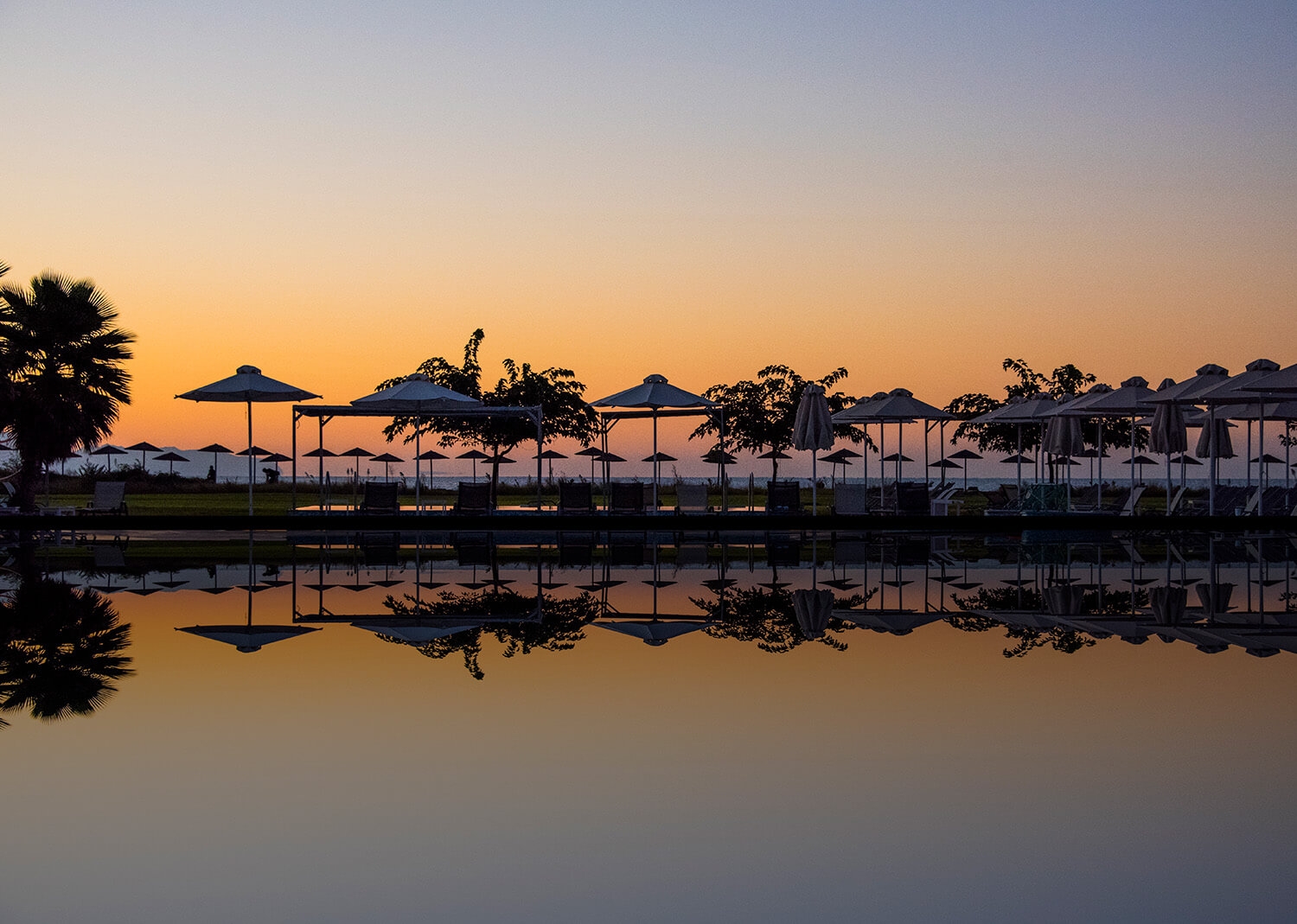
The Peloponnese doesn't get the same attention as some of the big-name Greek islands and Athens, which is exactly why it is a great choice for families. It's quieter, less crowded with empty beaches, hidden coves and crystal-clear water that feels a world away from the tourist trail.
Families with younger kids will particularly appreciate the short transfer times (especially if you stay with us at Messini Beach Club). Touch down, grab your bags, and you'll be in the water before your kids can even ask "are we there yet?".
Another thing that also sets the Peloponnese apart is the history. The Peloponnese is home to Sparta, the birthplace of the Olympic Games and some of the most compelling mythology in all of Greece. It's the kind of place where history comes alive, and you feel like you're walking in the footsteps of demigods and ancient warriors.
And if that feels a little too boring for you or your kids, there's plenty of water sports, mountain biking and cycling routes to get stuck into.
Need a base for exploring the Peloponnese? Check out Messini Beach Club – it sits right on the coast with easy access to some of the most beautiful stretches of beach in the region.
Paleros – Traditional Village Life and World-Class Water sports

Paleros? Where the hell is that? Yes, it's not one of the most popular beach resorts in Greece but tucked away on the western coast of mainland Greece, with a sheltered bay of clear, calm Ionian waters, it feels like it's been designed by Zeus himself with families in mind.
Its location also means that it has a gentle, consistent breeze that rolls through in the height of summer, stopping the heat from ever becoming too oppressive for younger children.
The light winds also make it one of the best water sports spots in Greece. So, whether you're learning to sail or picking up a paddleboard for the first time, the conditions here are pretty much ideal.
Away from the water, Paleros is a proper, unspoilt Greek village. Tavernas line the waterfront, and the pace of life is wonderfully slow. And that's very much a good thing.
Head to Vounaki Beach Club for the full Paleros experience. It's perfectly placed on the bay and offers a brilliant range of activities, all included in your holiday price.
Lefkada – Island Energy Without the Ferry Transfer

Here's a fun fact about Lefkada: it's technically not an island. It's connected to the Greek mainland by a small rotating pontoon bridge, which means you get the beaches, the scenery, the atmosphere of a beautiful Ionian island – but without having to pack the sea sickness pills for the ferry transfer. Win-win.
The beaches in Lefkada really are something. Porto Katsiki, with its dramatic white cliffs dropping straight into turquoise water, is regularly rated among the best in the whole of the Mediterranean. There are also quieter, more sheltered options dotted around the island that are brilliant for families with younger children.
Lefkada is also one of the top destinations in Europe for sailing and windsurfing, with consistent light winds making it perfect for beginners and families who want to pick up a board or a tiller for the first time.
You also won't find the cruise ships and crowds you get on bigger islands here, which makes the whole place feel calmer and more relaxed. Which, after all the school runs, juggling after-school activities and battling endless piles of washing up, is a very welcome vibe.
Sound good? Cosmos Beach Club is the perfect base for exploring everything Lefkada has to offer — from water sports and windsurfing to road cycling and mountain biking, it's all there.
Corfu – Waterparks, Sandy Beaches and Day Trip Heaven
Corfu has something for almost every type of family holiday. The west coast has wide, sandy beaches for those classic beach days. The east coast, by contrast, has calmer, more sheltered bays that are well-suited to families with smaller children.
If you've got kids who are hard to impress, Aqualand should do the trick. It's the biggest waterpark in Greece, and a day there is a non-negotiable once they know it exists.
Beyond the waterparks and beaches, there's real depth to the island. Corfu Old Town is a UNESCO World Heritage Site, full of Venetian-style lanes and colourful buildings. Day trips by boat to the neighbouring island of Paxos are also popular, with stops at the famous Blue Caves and hidden sea coves.
It's also one of the easiest Greek islands to get to from the UK, with excellent flight connections from most major airports.
Crete – The Perfect Mix of Beach and Culture
If you want diverse sandy beaches, dramatic gorges, imposing mountains and ancient history all in one place, then Crete is the perfect option.
The history here is the kind that captures kids' imaginations. They can run around the Palace of Knossos, imagining they are running away from the Minotaur, or explore the birthplace of Zeus at the Cave of Diktaion Andron.
Then there's the food. Cretan cuisine is its own distinct thing within Greek cooking — fresh cheese, golden pastries (Kalitsounia), pillowy Loukoumades doughnuts and some of the best grilled fish you'll find anywhere in the country.
For younger families, there's no shortage of dedicated attractions: WaterCity near Heraklion is a solid waterpark, CRETAquarium is great for curious younger minds, and the walk through the Samaria Gorge is a proper adventure for older kids and teens.
When to go? The best time to travel
Greece has a long season, which gives you real flexibility depending on when school holidays fall and what kind of holiday you’re after. Here’s a rough guide to how each part of the summer plays out.
May: Warm and sunny — typically 22–27°C — with quieter beaches, even in half-term. Some resort facilities open mid-May, but most are open by half-term although it’s worth checking before you book.
July–August: The hottest months, with temperatures reaching 28–33°C in some areas. It’s the busiest time of the year for a reason. Everything is open, the sea is at its warmest and the resorts are buzzing. But it’s also the busiest and most expensive time to go. Book well ahead, especially if you’re travelling during the school summer holidays.
September: Arguably the sweet spot for families with one minor issue – the school calendar. If you do have younger children not in school yet, then September can be one of the best times to visit Greece. The sea is still warm from the summer, the tourist crowds thin out quickly and prices drop back down.
October: Best suited to the Southern mainland or islands like Rhodes for a mild late-season break. The temperatures are lower but still warm - 22–25°C in most places – by British summer standards. The sea is a little cooler, especially later in October, and the temperatures drop late at night. But it does have one advantage over September... There’s a half-term slap, bang in the middle of it. So, you can actually get away, if you’ve got school-aged children.
Top tips for travelling to Greece with kids

Pack Wisely
It sounds obvious, but a well-packed bag makes a huge difference. Here’s some of the essentials to take:
Sun protection: High-factor sunscreen, UV-protective swimwear and a decent sun hat are non-negotiable. The Greek sun is considerably stronger than most families are used to back home, and it catches people out quickly — particularly in the first couple of days.
Water shoes: Many Greek beaches have rocky entries or pebbly shores. A pair of lightweight water shoes makes getting in and out much easier, especially for younger children.
Snorkelling kit: You can hire gear locally or have it included in your package at Neilson Beach Clubs, but if you’ve got older kids who love being in the water, bringing your own mask and fins guarantees a better fit.
A light layer for evenings: Even in peak summer, evenings can be surprisingly cool once the sun goes down. A light cardigan or jacket earns its place in the bag every time.
Motion sickness remedies: If you’re planning any boat trips or ferry journeys, it’s worth packing these just in case. Catamarans in particular can be quite lively in choppy summer winds.
Only island hop if you’re up for a challenge
Island hopping sounds brilliant on paper. And it can be. But it’s worth going in with realistic expectations, especially if you’re travelling with children and a significant amount of luggage.
Each crossing eats roughly half a day once you’ve factored in transfers, check-in times and the journey itself. With kids in tow, that adds up fast. A more relaxed approach — picking one base and doing day trips from there — tends to work better for families.
If you do want to explore a few islands, a couple of things are worth knowing: catamarans, while faster, are more susceptible to the summer winds and can get choppy. And the main island groups (Ionian, Cyclades, Dodecanese) aren’t well connected to each other, you’ll usually need to fly back through Athens to get between them, which adds time and cost.
Choose your accommodation carefully
The type of accommodation you choose can make or break a family holiday. Each option has its own pros and cons:
Resorts and Beach Clubs (like Neilson’s): Activities, kids’ clubs and most meals are included in the price, which keeps budgeting simple and gives parents a proper break. Ideal if you want everything sorted without having to plan each day from scratch.
Villas: Great for larger family groups or those who want their own space and routine. More flexibility, but you’re self-catering, which means planning meals and potentially more running around finding restaurants.
Apartments: A middle ground. More space than a hotel room, slightly more independence than a full resort. Works well for families who like cooking some of their own meals but want to eat out a bit too.
If you’ve got fussy eaters, a resort or Beach Club takes a lot of the stress away. And if mum and dad could do with some actual time together without the kids, having a kids’ club on site is worth its weight in gold.
A few other things worth knowing
Get a GHIC card: The UK Global Health Insurance Card covers emergency medical treatment across Greece. It’s free, quick to apply for and absolutely worth doing before you travel. Don’t skip it.
Respect the heat: Greece is considerably hotter than the UK and it catches people out. Aim to be off the beach or in the shade between midday and 3pm, drink more water than you think you need and keep the sunscreen topped up throughout the day.
Don’t over-schedule: The temptation is always to pack in as much as possible. Resist it. Greece rewards a slower pace. Some of the best family memories come from an afternoon spent doing nothing more ambitious than a long lunch and a swim.
Learn a few phrases: Most resort areas are well set up for English speakers, but even a few words of Greek — Yia sou (hello/goodbye), Ef-kha-ri-STO (thank you), Kali-ME-ra (good morning), go down brilliantly and locals genuinely appreciate the effort.
Start planning your family holiday to Greece
There’s a reason Greece remains one of the most popular family holiday destinations in the world. Plenty of flights, calm seas, welcoming locals, food that even the fussiest kids tend to enjoy. It just works.
Whether you’re looking for a peaceful week on a quiet Ionian bay or an action-packed holiday with water sports, learning to sail and a kids’ club keeping everyone busy, the best places in Greece for families are varied enough to suit every type of trip.
We’ve got five Beach Clubs in Greece — Cosmos, Messini, Levante, Vounaki and Buca — all designed around giving families more of what they love: brilliant beaches, a huge range of included activities and a relaxed, social atmosphere. of included activities and a relaxed, social atmosphere that works brilliantly for all ages.
Ready to start planning? Explore some of our articles on best things to do with kids in Greece, where to windsurf in Greece, our guide to kids clubs and our family packing list for your beach holiday.


